
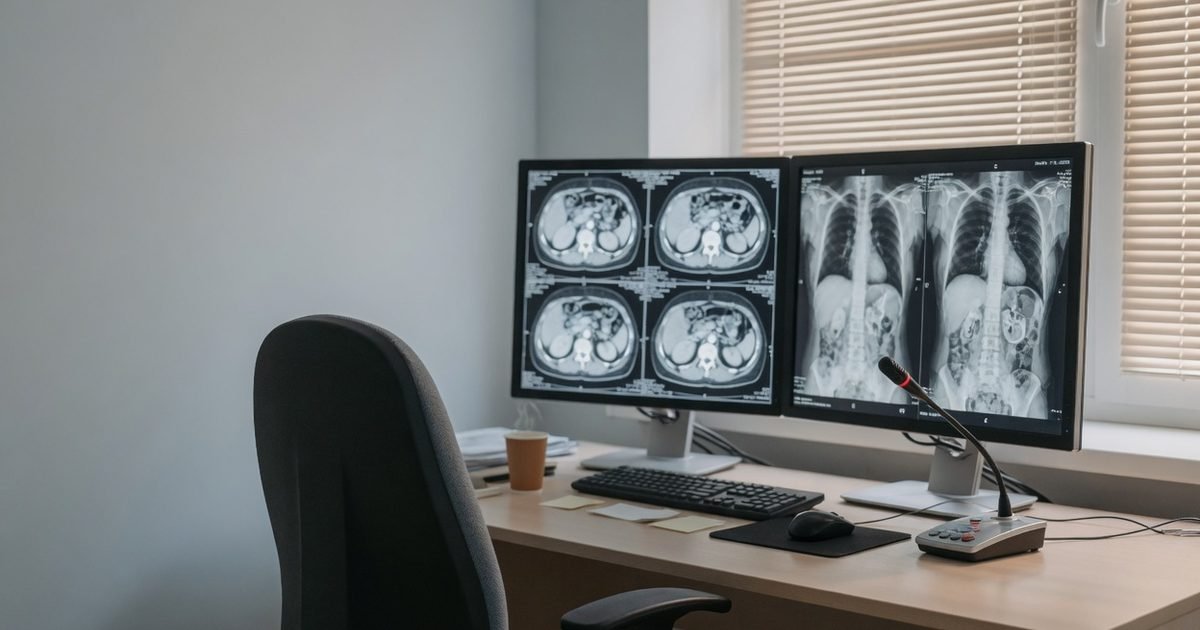
A cancer diagnosis arrives with a plan attached: this staging, this surgery, this chemotherapy, in this order. For most patients the plan is sound. Oncology is also a field where a structured review by a second specialist matters, because the treatment is demanding, the stakes are high, and the decisions branch early.
A written second opinion does not require travelling anywhere. A remote review from an Indian specialist works from records you already hold, and what you send shapes how useful the answer is.
If you want to discuss your case first, message us on WhatsApp or use the contact page. We respond within four business hours.
This article is general information, not medical advice. Decisions about cancer treatment rest with you and your treating doctors.
What does a cancer second opinion review?
A useful cancer second opinion is not a yes/no verdict on your oncologist. It is a structured re-examination of the chain of reasoning that leads to a treatment plan:
- The diagnosis itself: what the pathology shows, including tumour type and grade
- The staging: how far the disease extends, and whether the available imaging supports the stage assigned
- The completeness of the work-up: whether any test that could change the plan is missing, including biomarker or molecular tests where relevant to the cancer type
- The plan: whether the proposed sequence of surgery, systemic therapy and radiation reflects current standard practice for that diagnosis and stage
- The alternatives: what other reasonable approaches exist, and what each trades away
You receive a written report you can read slowly, share with family across time zones, and take to your treating team.
When do second opinions tend to change plans?
No honest facilitator can tell you how likely a change is in your case, and we will not invent a number. Oncology practice does show where changes concentrate when they happen:
The interpretation of pathology or staging shifts. A second reader can re-read the findings, and the stage can move when a reviewer weighs the imaging differently or asks for one more test. Because the stage anchors everything downstream, even a small reinterpretation can redirect the plan.
A missing test changes the options. For several cancer types, biomarker and molecular results now determine which treatments are relevant at all. A reviewer who asks “was this tested?” and finds it wasn’t can open or close entire branches of the plan.
The sequence changes rather than the destination. A reviewer sometimes recommends the same treatments in a different order: systemic therapy before surgery instead of after, for example. The ingredients stay the same while the plan and the experience of it change.
The extent of surgery is reconsidered. Reviewers sometimes see room for a less extensive operation than proposed, or reason to advise a more complete one. Either direction matters to the person having the operation.
The goal of treatment is clarified. This is the hardest of the categories and often the most useful. A second opinion can open an honest conversation about what a proposed treatment is realistically for, and whether the plan matches what the patient wants from it.
Awareness of options widens. A reviewer working from current practice in a different health system can point to approaches your local pathway did not present. Where relevant, that includes the existence of clinical trials as a category to ask your treating team about. A second opinion cannot enrol you in anything; it can make sure the menu you are choosing from is complete.
Often the review changes nothing and confirms the plan. Patients describe that outcome as worth the fee on its own: chemotherapy is easier to begin when the question “is this right?” has been answered by someone with no stake in the answer.
What should you send for a remote review?
The file you provide sets the quality of a remote opinion. Send:
| Document | Why it matters |
|---|---|
| Pathology / biopsy report | The anchor of the diagnosis, and the document that matters most |
| Imaging reports (and images where available) | Staging and treatment planning depend on them |
| Staging notes from your treating team | Shows the reasoning being reviewed |
| Biomarker / molecular test results, if done | Determines which therapies are relevant for several cancer types |
| Treatment summary (received and proposed) | Lets the reviewer assess the plan rather than infer it |
| Medication list and brief history | Fitness for treatment shapes what can be recommended |
After we connect, we send a secure, single-use upload link. Medical records never travel through website forms. If some documents are missing, tell us; part of the review’s value is a precise list of what should exist and doesn’t.
How does Medtu Care’s second opinion work?
- Share your case: diagnosis, current plan, and your file through the secure link.
- Specialist review: an oncology specialist relevant to your cancer type reviews the full file. Our remote consultation ($50) is available first if you want a conversation before committing to the written review.
- Written report: diagnosis review, comments on staging and work-up completeness, an opinion on the proposed plan, alternatives worth discussing, and specific questions to raise with your treating team.
- Discussion: you can follow up on the report with us, and we encourage you to take it to your oncologist.
The fee is $150. The $50 teleconsult fee credits in full toward the second opinion, and the $150 credits in full toward full journey coordination if you later choose treatment in India. Crediting and refund rules are on the fees page.
Medtu Care is a facilitator, not a hospital, and the reviewing specialist’s opinion is independent. We take no commissions from hospitals. Our fees are paid by you, published upfront, and itemized separately from your hospital bill. A second opinion that says “your current plan is right, stay home” is a success by our model, not a lost sale.
When in a treatment plan is a second opinion most useful?
The natural moments for a second opinion are the plan’s hinges: after diagnosis and staging but before treatment begins; before a major, hard-to-reverse step such as significant surgery; when a plan changes because the disease has behaved unexpectedly; or when your team offers you a choice between two paths and says either is reasonable. A review works from records you already have and runs in parallel with your existing care, so you are not pausing anything to obtain it.
Urgency, though, is a medical judgment, not an administrative one. If your treating team has flagged your case as time-critical, tell us that when you write, and ask your oncologist directly how much time a review can safely take. The answer shapes whether a full written review or a faster teleconsult conversation fits your situation.
Should your treating team know about the second opinion?
A second opinion is most useful when you use it openly. Tell your oncologist you are seeking one, since it is routine in cancer care. Share the written report when it arrives, and take any questions or alternatives it raises back to your treating team. The aim is a plan that two specialists have examined rather than one.
If surgery is part of your plan, our companion piece Second Opinion Before Surgery: 7 Questions to Ask gives you the conversation checklist.
Ready to have your plan reviewed, or unsure whether your file is complete enough? Message us on WhatsApp or write via the contact page. We respond within four business hours.
Sources
- Consensus Document for Management of Breast Cancer — Indian Council of Medical Research, 2016. Systemic therapy is individualised according to disease stage, menopausal status and ER/PR/HER2 status alongside other prognostic and predictive factors, which is why receptor and biomarker results change which treatments are relevant at all; where a patient presents without sufficient clinico-pathological information, the recommended work-up is to review the pathology report and blocks for tumour size, margins, type, grade and receptor status; the document also records the need for multi-disciplinary teams in evidence-based management. Accessed 28 July 2026.
- FAQs on Telemedicine Practice Guidelines — Board of Governors in supersession of the Medical Council of India, April 2020. Remote consultation by a registered practitioner is recognised practice notified under the Indian Medical Council Act, 1956; where a physical examination is necessary but not possible on the mode being used, the consultation is to be stopped and the patient referred for in-person review, which is the limit of what any records-based review can settle. Accessed 28 July 2026.