
· Medtu Care Team
Kidney Stone Surgery (PCNL/RIRS) Cost in India: Ranges and Recovery
Conservative price ranges for PCNL and RIRS kidney stone surgery in India, what hospital packages cover, and how recovery shapes your travel plan.
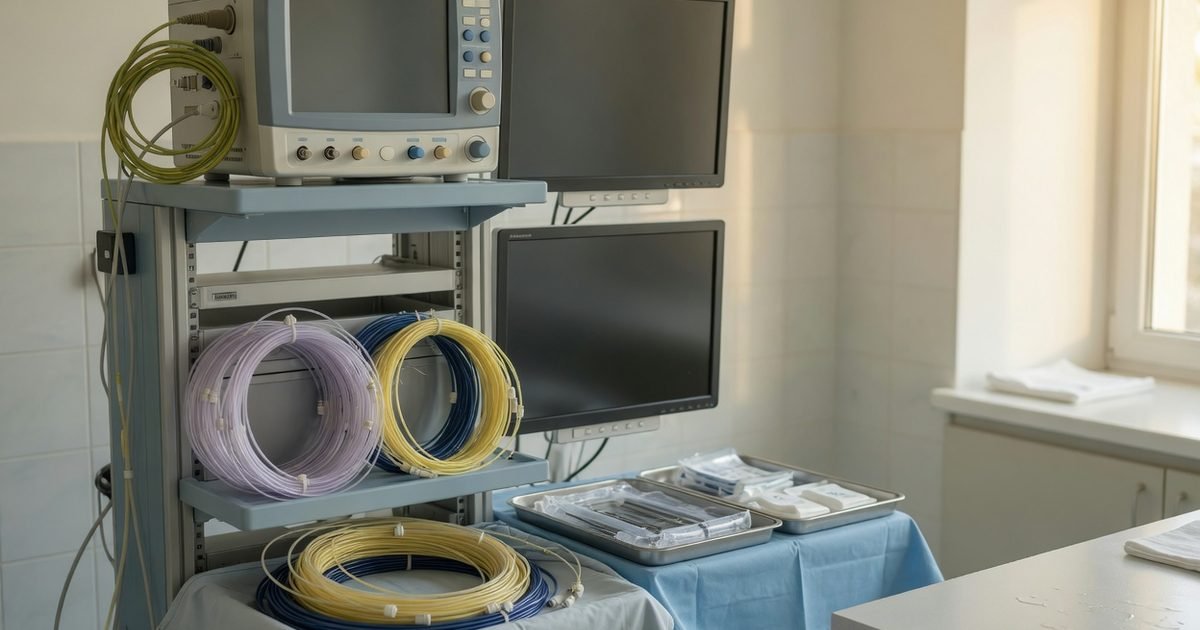
Kidney stone surgery is one of the most commonly quoted procedures for international patients in India, and one where quotes vary enormously for what sounds like “the same operation”. Stone size, technique and hospital tier explain most of that spread. This guide sets out honest ranges and what they do and don’t include.
Have a CT report or ultrasound in hand? Message us on WhatsApp or use our contact form to start an itemized quote process. We respond within four business hours.
Methodology: We compiled these ranges from hospital-published package rates and from itemized quotes we obtained for real cases; updated July 2026. Your written quote for your case is what matters. These ranges only tell you what is plausible.
This article is general information, not medical advice. Treatment choices belong to you and a registered urologist who has reviewed your imaging.
PCNL and RIRS in plain language
Both are ways of removing kidney stones that are too large or awkward to pass naturally:
- PCNL (percutaneous nephrolithotomy): the surgeon reaches the kidney through a small incision in your back and removes the stone directly, fragmenting it if needed. It is the workhorse for large stone burdens, including staghorn stones.
- RIRS (retrograde intrarenal surgery): the surgeon passes a flexible scope through the natural urinary passage up into the kidney and breaks the stone up with a laser. There is no incision. It is generally used for small-to-medium stones, or stones in positions PCNL reaches less cleanly.
- ESWL (shockwave lithotripsy), which breaks stones from outside the body, is a third option for suitable smaller stones, usually done as a day procedure.
Your urologist chooses the technique from your CT scan: stone size, number, density and position, along with your kidney anatomy, infection history and general health. Some cases need a combination, or a planned second sitting.
What kidney stone surgery costs in India
| Item | Plausible range (INR) | Approx. USD |
|---|---|---|
| PCNL / RIRS international package | ₹85,000 – ₹2,60,000 | ~$1,000 – $3,000 |
Honest notes on this band:
- Do not assume the two techniques price alike. RIRS avoids an incision but uses an expensive flexible scope and laser; PCNL involves an incision but is often shorter for big stones. India’s own published government schedule, for the Central Government Health Scheme, puts PCNL at roughly three times RIRS rather than level with it. Those are scheme rates rather than private international packages, so treat the direction as a warning against assuming, not as your price. Get both quoted in writing if you are a candidate for either.
- The lower end of the band generally reflects straightforward single stones treated at non-metro hospitals in shared rooms; the upper end reflects complex or bilateral stone burdens at metro hospitals in private rooms.
- ESWL is not automatically the cheap option. It is non-invasive and suits only certain stones, but the government schedule prices it close to PCNL and well above RIRS, so “no incision” does not reliably mean “less money”. Suitability comes first, price second.
- These are plausibility ranges, not offers, and never a basis for payment. Pay only against an itemized written quote issued for your named case.
What moves the price for your specific case
- Stone burden. A 3 cm staghorn stone and an 8 mm lower-pole stone are different operations under the same billing label.
- One kidney or both. Bilateral disease may mean a longer single surgery or two sittings. Clarify which one the hospital is quoting.
- Technique and equipment. Laser type, flexible versus rigid scopes, and imaging used in theatre all change what the package costs.
- Staged procedures. Large burdens sometimes need a planned second procedure (“relook”). Ask whether the quote covers one sitting or the complete clearance plan.
- City, hospital tier and room class. As with every procedure in India, metro flagships and equally accredited non-metro hospitals quote the identical operation at different prices.
- Your health profile. Urinary infection needing pre-treatment, kidney function issues, diabetes or cardiac history add work-up, monitoring and sometimes ICU observation.
What packages usually include — and exclude
Typically included: the procedure, surgeon and anaesthesia fees, theatre and equipment charges, the stated ward days, routine in-hospital medicines, and standard checks before discharge.
Typically excluded, and worth asking about by name:
- Pre-operative work-up: CT scan (if repeated in India), blood and urine tests, cardiac clearance.
- Ureteric stent removal. A stent is very commonly left in after RIRS or PCNL and removed weeks later in a short procedure, often billed separately.
- A staged second procedure, if your stone burden needs one.
- Extra hospital days, ICU care, blood products, complication management, and take-home medication.
- Everything outside the hospital: attendant accommodation, food, transport.
Compare quotes line by line against the inclusion list, never by headline number. Where a hospital declines to itemize, that itself is information.
Recovery — and why the stent changes your travel maths
The admission for PCNL or RIRS is typically short, and many patients feel surprisingly well quickly. Your travel plan turns on what comes after:
- If a stent was placed, it needs removal, usually a quick procedure some weeks later. You and your surgeon must agree the plan before you book flights: stay in India until removal, or fly home and have a local urologist remove it (with the surgical notes in hand).
- Follow-up imaging to confirm the kidney is clear may be wanted before you leave.
- Stents can cause urgency, frequency and discomfort in the meantime. That is normal and manageable, but better to expect than to discover mid-journey.
Build slack into your return ticket, and get the follow-up sequence in writing at discharge. When we coordinate a journey, we make sure your discharge summary and imaging travel home with you for your local doctor.
Questions worth asking every hospital
Send the same written list to each hospital you consider, and compare the answers side by side:
- Which procedure are you recommending for my stone (PCNL, RIRS, ESWL or a combination), and why?
- Is complete clearance expected in one sitting? If a second procedure may be needed, is it inside or outside this quote?
- Will a stent be placed, who removes it, when, and at what cost?
- What is in the package and what is out? Ask specifically about pre-operative tests, extra nights, ICU rates and medicines to take home.
- What imaging will confirm the kidney is clear before I travel home?
- What records do I leave with, and who answers questions after I am back in my country?
The answers cost nothing to collect and tell you a great deal about the clinical plan, the honesty of the billing, and how you will be treated when something unplanned happens.
Before you book: is surgery the right call?
Not every stone needs an operation. Small stones may pass with medical management; some only need monitoring over time; ESWL suits others. If you have any doubt about the advice you have received, a written independent second opinion reviews your imaging and reports for a flat fee, from a specialist with no stake in whether you proceed to surgery.
How Medtu Care works
We take no commissions from hospitals. Our fees are paid by you, published upfront, and itemized separately from your hospital bill. For a stone-surgery journey we arrange a remote urologist consultation, gather itemized quotes from multiple hospitals matched to your case, and coordinate admission, visa paperwork and travel. You always pay the hospital directly. Published fees are on the fees page; the clinical scope we coordinate is on our urology page.
Ready for real numbers for your actual case? Message us on WhatsApp or send your details. We respond within four business hours.
Sources
- CGHS package rate list, Kanpur and Gwalior, updated 11 July 2024 — Central Government Health Scheme, Ministry of Health and Family Welfare. The government schedule prices percutaneous nephrolithotomy at ₹20,000 unilateral and ₹25,000 bilateral against ₹6,800 for retrograde intrarenal surgery / flexible ureteroscopy, and extracorporeal shock wave lithotripsy at ₹19,550. On that schedule the techniques are not priced alike, and ESWL is not the cheapest of the three. Accessed 28 July 2026.