
· Medtu Care Team
Brain and Spine Surgery Cost in India: 2026 Ballpark Ranges (INR/USD)
Conservative 2026 ballpark ranges for brain and spine surgery in India in INR and USD: what neuro packages cover, what they exclude, and how to read a quote.
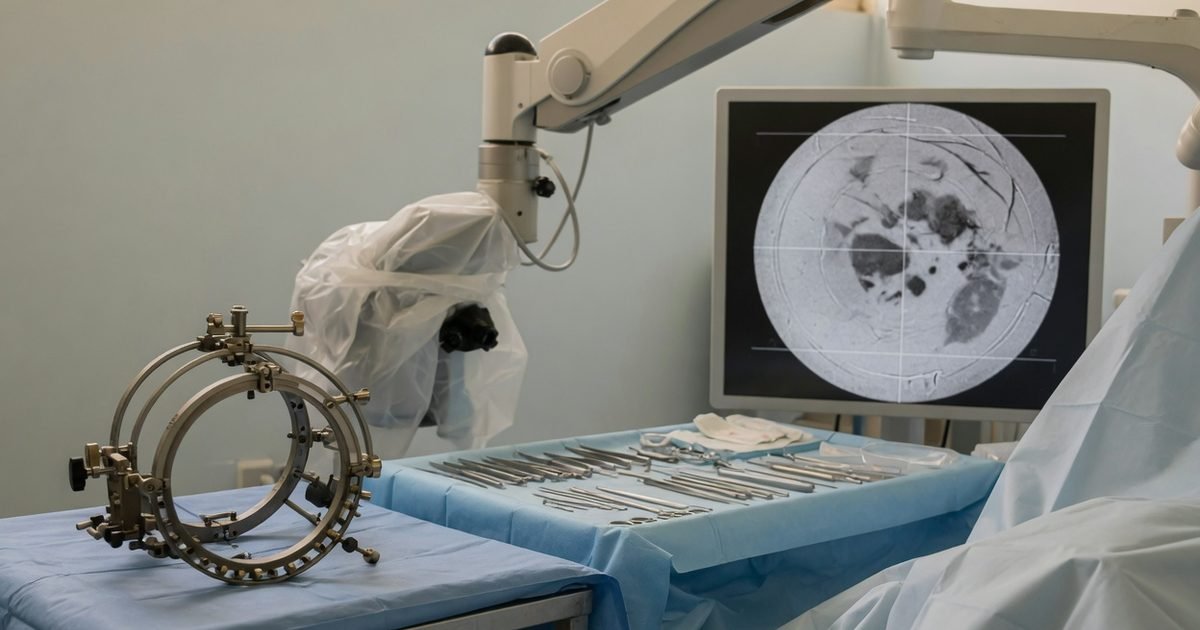
If a hospital, an agent, or a well-meaning relative has quoted you a figure for brain or spine surgery in India, this page exists so you can judge whether that number is plausible. It is not a price list, and we are not a hospital. Neurosurgery is the field where quotes swing widest, so what follows is the band inside which honest quotes usually land, and a map of what those quotes cover and leave out.
We compiled these ranges from hospital-published package rates and from itemized quotes we obtained for real cases; updated July 2026. Your written quote for your case is what matters. These ranges only tell you what is plausible.
Have a neuro or spine quote you want sanity-checked? Send it on WhatsApp or via our contact form. We respond within four business hours.
Why brain and spine quotes vary more than almost any other operation
More of the bill is decided during and after the operation than before it. A knee replacement is largely predictable: one implant, a known number of days. A neurosurgical admission is a chain of variables: how much imaging is done and then repeated, whether the theatre uses navigation and intra-operative neuromonitoring, how many nights are spent in neuro-ICU, and what metalwork is implanted once the surgeon can see the anatomy. Two patients with similar MRI reports can therefore be quoted different figures by the same hospital. That variation is not automatically padding. Treat it as padding when nobody will itemize it.
Even India’s public reference schedule is built around variation: the Central Government Health Scheme publishes its procedure rates filtered by city tier (Tier I, II or III), by hospital category (NABH, non-NABH or super-speciality) and by ward entitlement. If the government’s own schedule prices one procedure several different ways, a private international quote will too.
The 2026 ballpark ranges
All figures are wide planning bands for international self-pay patients at private multispecialty hospitals, converted at roughly ₹86 per US dollar. They are hospital costs, not our fees. Domestic Indian patients are often quoted lower.
| Planned procedure | INR (approx.) | USD (approx.) |
|---|---|---|
| Microdiscectomy / endoscopic lumbar discectomy | ₹1.5 – 5.0 lakh | $1,700 – $5,800 |
| Lumbar decompression (laminectomy, one to two levels) | ₹2.0 – 5.5 lakh | $2,300 – $6,400 |
| Cervical ACDF, single level | ₹3.0 – 8.0 lakh | $3,500 – $9,300 |
| Single-level lumbar fusion (cage and screws) | ₹3.5 – 9.0 lakh | $4,100 – $10,500 |
| Elective brain tumour craniotomy | ₹4.0 – 12 lakh | $4,700 – $14,000 |
| Stereotactic radiosurgery, single session (after evaluation) | ₹2.5 – 9.0 lakh | $2,900 – $10,500 |
| Deep brain stimulation, bilateral (device-dominated) | ₹10 – 30 lakh | $11,600 – $34,900 |
Skull-base tumours, multi-level constructs, revision surgery and significant heart, kidney or diabetes problems can sit above the top of these bands for defensible reasons. A quote far below a band deserves the same scrutiny as one far above it: usually something has been left out of it.
What moves a brain or spine surgery quote
- Imaging, before and repeated after. Neuro cases are imaging-heavy: MRI with contrast, CT, sometimes angiography or functional sequences beforehand, and a post-operative scan afterwards. Ask how many studies the package covers and what an extra one costs.
- Navigation and intra-operative neuromonitoring. Image guidance and nerve or cord monitoring are used in many tumour and complex spine cases, and are often billed as separate line items rather than sitting inside the package.
- Implants: cages, screws, plates, rods, electrodes. In spine surgery the hardware is frequently the largest single line. Implants are regulated medical devices in India, risk-classified from Class A to Class D under the Medical Devices Rules, 2017, with imported devices requiring an import licence. Imported systems are generally quoted above Indian-made equivalents, and a quote naming neither the implant system nor the number of levels is incomplete.
- ICU and ventilator nights. A craniotomy usually means planned neuro-ICU time. The package allows a fixed number of nights; everything beyond that is billed at the daily rate, so ask what that rate is before you sign anything.
- Levels and approach. One level versus two changes both hardware and theatre time. Endoscopic and minimally invasive approaches are priced differently from open surgery, and your surgeon chooses between them from your imaging. It is a clinical decision, not a menu choice.
- Your other conditions. Diabetes, anticoagulation, heart or kidney disease, obesity and previous spine surgery all add investigations, reviews and days. Packages price the uncomplicated case.
What a neuro package includes — and what it usually leaves out
Usually included:
- Surgeon, neuro-anaesthesia and operating theatre charges
- A stated number of ICU nights and ward nights, in a stated room category
- For spine cases, implants of a named class, for a stated number of levels
- Routine pre-operative workup and standard consumables
- In-hospital physiotherapy or early mobilisation
Usually excluded. Ask about each one in writing:
- Repeat or additional imaging, including the post-operative scan
- Intra-operative neuromonitoring and navigation, where billed separately
- Implant upgrades, or extra levels instrumented once surgery is under way
- ICU and ventilator days beyond the allowance, and blood products
- Frozen section, final histopathology, and molecular testing on a tumour specimen
- Discharge medicines, and outpatient rehabilitation after discharge
- Management of comorbidities, and any complication, re-admission or repeat surgery
- Attendant food and lodging
Discharge medication deserves its own question. The drugs most often sent home after cranial surgery are well-established ones: the anticonvulsants carbamazepine, levetiracetam, phenytoin and sodium valproate all appear in the “Medicines used in Neurological Disorders” section of India’s National List of Essential Medicines, as do dexamethasone and mannitol elsewhere on that list. Ask for the discharge prescription in writing, with a month’s cost estimate attached. Medicine prices are revised from time to time, and the National Pharmaceutical Pricing Authority is the official place to confirm the current position.
Length of stay and rehabilitation decide the final bill, not the operation
Time separates a quoted package from a final invoice in neuro cases. The surgical fee is fixed on the day it is agreed; the days that follow are not. An extra three nights in intensive care, a delayed extubation, a wound issue, or slower-than-expected mobilisation can each add more to the bill than an implant upgrade would.
Rehabilitation is the second half of that story, and it is almost never inside the package. Fusion and decompression patients typically need weeks of structured physiotherapy before a long flight is sensible; after brain surgery, some patients need physiotherapy, occupational therapy or speech and language therapy, and the volume of that is hard to predict. Ask your surgeon for an expected total stay in India, not only an expected hospital stay, and budget the difference. Our guide to what treatment in India really costs explains why an honest facilitator quotes a range here rather than a number.
DBS and stereotactic radiosurgery are evaluations before they are prices
Nobody can quote you accurately for deep brain stimulation or stereotactic radiosurgery from a diagnosis alone, and those two rows in the table are the widest for that reason. Both begin with a structured evaluation of whether you are a candidate at all, and no one can tell you that answer before it happens.
For DBS, the implanted system dominates the cost: single-channel or dual-channel, non-rechargeable or rechargeable, and the battery replacement that follows years later. For stereotactic radiosurgery, the number and size of lesions, the planning work, and whether treatment runs to one session or several move the figure substantially. The honest sequence is evaluation first, quote second. A fixed price offered before any evaluation is marketing, not a quote. Our neurology and neurosurgery overview sets out how we sequence these cases.
Budgeting beyond the hospital bill
The package covers the admission, not the journey. A realistic neuro budget adds accommodation near the hospital for the recovery weeks before your surgeon clears a long flight (guesthouses and mid-range hotels typically run roughly ₹1,500–5,000, about $17–58, per night); flights for you and an attendant; outpatient rehabilitation; medicines, braces or collars; and a contingency reserve. For orthopaedic surgery we suggest 15–20% above the package price. For neuro cases, plan closer to 25%, because ICU days and rehabilitation are the items that most often run past the estimate. The attendant’s guide covers the logistics for whoever travels with you, which for a neuro case is not optional.
How to sanity-check a brain or spine surgery quote
- Is it in writing and itemized? A verbal figure or a one-line total is not a quote.
- Is the implant system named, with make, model, class and number of levels, and with upgrade and extra-level prices listed?
- How many ICU nights and ward nights are included, and what does each extra night cost?
- Is imaging inside or outside the package, including the post-operative scan?
- Are navigation, neuromonitoring, frozen section and histopathology included or billed separately?
- What is excluded? Ask for the exclusion list, not only the inclusion list.
- What happens if things go off-plan, with extra ICU, transfusion or re-operation, and at what rates?
- Does the total sit inside the bands above? If not, ask why. There may be a good reason, and you are entitled to hear it.
Before any of that, settle the prior question: is this operation the right step now, and is the proposed approach reasonable for your imaging? Spine surgery is an area where advice differs between surgeons, so an independent written second opinion is worth having before you commit. Our seven questions to ask before surgery covers how to run that conversation, and the spine surgery overview explains how we arrange the review.
Where our fees fit — and why they are not in the table above
Everything above is hospital cost, paid by you directly to the hospital. Medtu Care’s fees are separate, published and flat: $50 (₹4,300) for a remote consultation, $150 (₹12,900) for a written independent second opinion, and $1,000 (₹86,000) for full journey coordination. Each fee is credited in full toward the next step, with the details on our fees page. INR equivalents are approximate, at about ₹86 per US dollar. The USD figure is the fee. We take no commissions from hospitals. Our fees are paid by you, published upfront, and itemized separately from your hospital bill. That is why we can tell you when the cheaper quote, or no surgery at all, is the better answer.
Comparing brain or spine surgery quotes? Send them to us on WhatsApp or through the contact form. We respond within four business hours and will tell you what the numbers do and do not cover.
Sources
- CGHS Rate List — Central Government Health Scheme, Ministry of Health and Family Welfare. The official rate list is published per procedure and filtered by city tier (Tier I/II/III), facility category (NABH, non-NABH, super-speciality) and ward type (general, semi-private, private), showing that India’s own reference schedule prices one procedure several different ways. Accessed 28 July 2026.
- Medical Device & Diagnostics — Central Drugs Standard Control Organisation. Medical devices including implants are regulated under the Drugs & Cosmetics Act, 1940 and the Medical Devices Rules, 2017, risk-classified from Class A to Class D, with imported devices requiring an import licence. Accessed 28 July 2026.
- National List of Essential Medicines 2022 — Ministry of Health and Family Welfare. Section 5, “Medicines used in Neurological Disorders”, lists the anticonvulsants carbamazepine, levetiracetam, phenytoin and sodium valproate; dexamethasone and mannitol also appear on the list. Accessed 28 July 2026.