
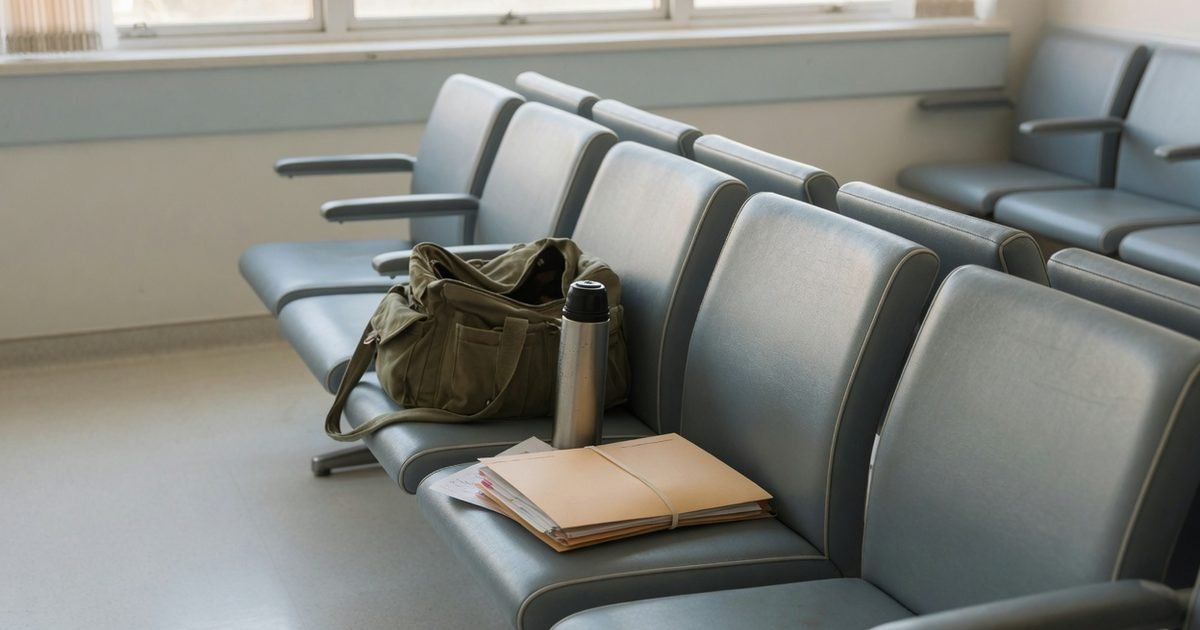
Behind almost every international patient in an Indian hospital there is an attendant (a spouse, a son, a sister) doing a second full-time job: paperwork, payments, pharmacy runs, food, and keeping the family back home informed. Hospitals publish guides for patients; the attendant rarely gets one. This one is for you.
It covers the four things attendants ask us about most (visas, a place to stay, money, and food), plus the daily rhythm of an Indian hospital and the checklist for going home.
Traveling as an attendant soon? Ask us anything on WhatsApp or via our contact form. We respond within four business hours.
What is the attendant visa, and how does it work?
If the patient travels on an e-Medical visa, up to two attendants can apply for the e-Medical Attendant visa, with validity tied to the patient’s visa. Apply together on the official portal, indianvisaonline.gov.in, and nowhere else. Unofficial “visa agent” sites add fees and risk. Attendants of OCI cardholders who themselves hold OCI need no visa at all.
Three practical notes:
- Match your dates to the treatment plan, with margin. Discharge dates move. Book changeable tickets where you can.
- Carry the paper. Print the visa grant, the hospital letter, and the patient’s key medical reports for immigration. Officers ask for them rarely, and you want them in your hand when they do.
- Verify terms before you book. Visa rules, fees, and processing practices change; the official portal is the only source that counts. Our corridor guides cover country-specific details, for example treatment from Kenya, from Nigeria, and from Tanzania; the full list is at international patients.
Where should an attendant stay?
Plan two phases:
During admission. Most Indian private hospital rooms include an attendant bed or couch, so one attendant typically sleeps in the room at no extra charge. Confirm this when you choose the room category; a room without one becomes a real budget line.
Before admission and after discharge. This is where most of the accommodation budget goes, because patients usually spend more nights recovering near the hospital than inside it. Rough planning figures:
| Option | Typical cost per night (approx.) | Good for |
|---|---|---|
| Guesthouse / lodge near hospital | ₹1,500 – 3,000 ($17 – $35) | Short stays, tight budgets |
| Mid-range hotel | ₹3,000 – 5,000 ($35 – $58) | Comfort, reliable power and Wi-Fi |
| Serviced apartment | ₹40,000 – 90,000 per month ($470 – $1,050) | Stays beyond ~2 weeks; cooking your own food |
Choose distance over luxury: a plain room ten minutes from the hospital beats a nicer one across the city, because you will make that trip more times than you think. Hospitals keep lists of nearby options; when we coordinate a journey, we arrange accommodation through our travel arm, Tripcuro, at real prices with receipts.
How do you handle money without surprises?
- Pay the hospital directly, always. Deposits, interim payments and the final bill go straight to the hospital’s counter or bank account, never through an intermediary’s account, ours included. Get a stamped receipt for every payment.
- Cards work at big hospitals. International debit/credit cards and bank transfers are accepted at most large private hospitals. Tell your bank you are traveling so it does not block your card mid-treatment.
- Carry some cash for life, not for treatment. Autos, tiffin services, pharmacies, and small shops often prefer cash or Indian UPI apps (which most foreign visitors cannot easily use). Exchange money at banks or authorized dealers and keep the receipts.
- Understand the deposit rhythm. Hospitals typically take a deposit at admission and ask for further deposits as treatment proceeds, reconciling everything in the final itemized bill. Ask for interim statements every few days so the final bill holds no surprises.
- Check the itemized bill before settling. You are entitled to a line-by-line bill. Query anything unclear: staff expect it. Our cost guides (knee, hip, bypass, angioplasty) explain what typical packages include and exclude, which is where billing questions usually live.
What should an attendant eat, drink and do to stay well?
An attendant who falls ill is no help to the patient, so the boring rules matter: bottled or filtered water only, freshly cooked food over raw salads in the first days, and regular meals even on hospital days.
Eating well is easy. Hospital canteens are cheap and adequate, vegetarian food is universal, and halal food is easy to find in most treatment cities. Tiffin services, daily home-style meal deliveries at typically ₹100–250 per meal, make long stays much easier on an attendant. If the patient has dietary restrictions after surgery, the hospital dietician will brief you; ask for the instructions in writing.
What does an attendant actually do each day?
Indian private hospitals assume an involved family attendant, and the role is real:
- Mornings: doctors’ rounds. Be present if you can, because the team sets the day’s plan during rounds and answers your questions there. Keep a notebook and write down what the doctors say.
- Through the day: pharmacy runs, sample and report collection, deposit payments, and signatures. Keep every receipt in your folder.
- Communication: one attendant should be the single point of contact for the medical team and for the family back home. A daily WhatsApp summary to the family saves twenty duplicate phone calls.
- Language: English works in most private hospitals; where it thins out, translation apps cover the gaps, and hospitals can often arrange interpreters if you ask in advance.
- SIM card: buy one at the airport with your passport, or activate an eSIM before you fly. You will live on WhatsApp.
How do you get around an Indian city as an attendant?
Keep journeys short and boring. App-based cabs (Uber, Ola) work in every major treatment city and price the trip upfront, so a tired attendant skips the haggling; autos are fine for short hops if you agree the fare first. For the hospital run itself, many hotels near hospitals arrange a regular driver at a flat daily or per-trip rate, which is worth paying for during admission week. Save the hospital’s address in the local language on your phone to show drivers, and keep the international patient desk’s phone number written in your folder as well as saved in your phone.
What should an attendant check before flying home?
Do not leave the hospital without:
- The discharge summary, covering diagnosis, what was done, medicines, and the follow-up plan.
- The itemized final bill, checked and settled, with receipts.
- All reports and imaging, including copies of scans on disc or drive.
- Medicines for the journey and a doctor’s letter naming them, for customs and for the airline.
- The fitness-to-fly conversation: when the treating doctor says flying is reasonable, and what precautions apply.
- The follow-up plan, naming who to contact from home and how review consultations will happen remotely.
If you are organizing the whole journey as well as attending it, our guide to timing elective surgery around an India family trip covers the planning side, and the fees page shows what our coordination costs and what it includes. We take no commissions from hospitals. Our fees are paid by you, published upfront, and itemized separately from your hospital bill.
Want someone on your side of the counter for all of this? Message us on WhatsApp or use the contact form. We respond within four business hours.
Sources
- Indian e-Visa portal — eligibility, instructions and FAQ: “Only two e-Medical Attendant Visas will be granted against one e-Medical Visa”; the 4-to-120-day application window; e-visas are non-extendable and non-convertible. Accessed 28 July 2026.
- OCI cardholder FAQs — Online OCI Services, Ministry of Home Affairs: OCI gives a multiple-entry lifelong visa for visiting India for any purpose, plus exemption from FRRO/FRO registration for any length of stay, which is why an attendant who holds OCI needs no visa. Accessed 28 July 2026.
- Charter of Patients’ Rights adopted by the National Human Rights Commission — Ministry of Health & Family Welfare, Clinical Establishments portal: the patient’s right to “receive an itemized detailed bill at the time of payment”, and the right of relatives and caregivers to the discharge summary along with original copies of investigations. Accessed 28 July 2026.