
· Medtu Care Team
Endoscopy, ERCP and GI Surgery Cost in India: The Line Items That Set the Price
Wide 2026 planning ranges (INR/USD) for endoscopy, ERCP, gallbladder, hernia and bariatric surgery in India, and the line items that move a GI quote.
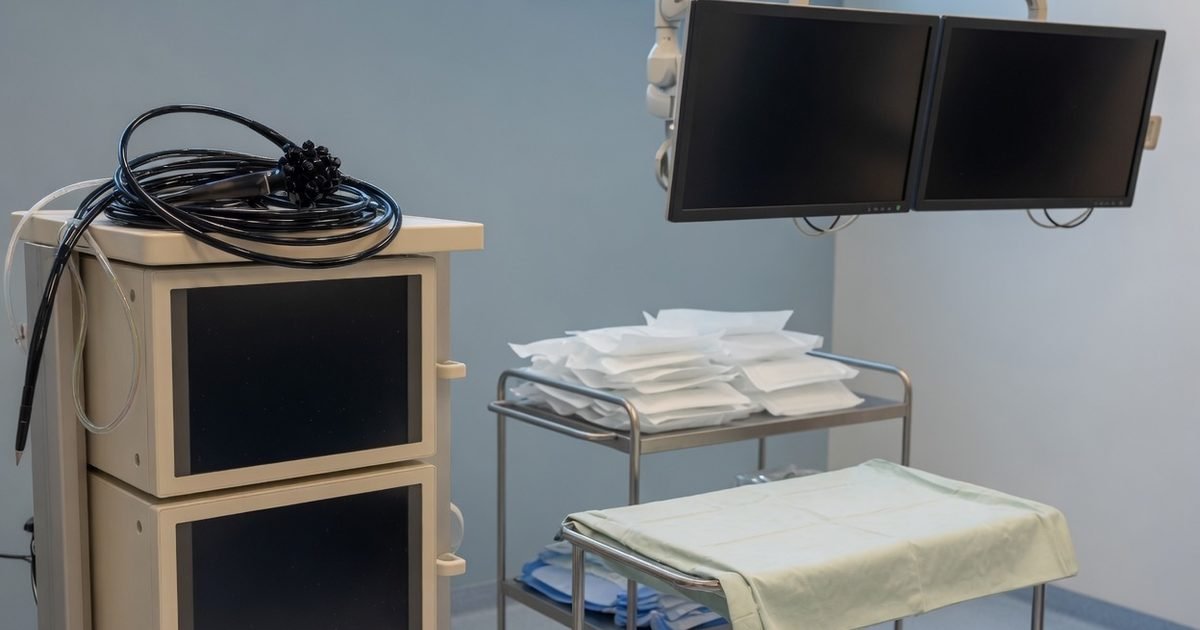
If a hospital, an agent, or a relative’s contact has sent you a number for an endoscopy, an ERCP, a gallbladder operation, a hernia repair or bariatric surgery in India, this page exists so you can judge whether that number is plausible. It is not a price list, and we are not a hospital. It is the band inside which honest quotes usually land, plus the handful of line items that explain almost all the difference between one GI quote and another.
We compiled these ranges from hospital-published package rates and from itemized quotes we obtained for real cases; updated July 2026. Your written quote for your case is what matters. These ranges only tell you what is plausible.
Have a GI quote you want sanity-checked? Send it on WhatsApp or via our contact form. We respond within four business hours.
What do endoscopy, ERCP and GI surgery cost in India?
Treat every figure below as a planning band rather than a price. The ranges are for international self-pay patients at private multispecialty hospitals, converted at roughly ₹86 per US dollar. Domestic Indian patients are often quoted less, and government reference rates lower again.
| Procedure | INR (approx.) | USD (approx.) |
|---|---|---|
| Diagnostic upper GI endoscopy (gastroscopy), day care | ₹4,000 – 18,000 | $45 – $210 |
| Diagnostic colonoscopy, day care | ₹6,000 – 28,000 | $70 – $325 |
| Endoscopy and colonoscopy in one sitting | ₹10,000 – 40,000 | $115 – $465 |
| Therapeutic endoscopy (polyp removal, banding, dilatation, bleeding control) | ₹20,000 – 1,00,000 | $230 – $1,160 |
| ERCP with sphincterotomy and duct clearance | ₹40,000 – 1,80,000 | $465 – $2,100 |
| ERCP with stent placement (plastic through to metal stent) | ₹70,000 – 4,00,000 | $815 – $4,650 |
| Laparoscopic gallbladder removal (cholecystectomy) | ₹60,000 – 2,50,000 | $700 – $2,900 |
| Laparoscopic inguinal hernia repair, one side, standard mesh | ₹65,000 – 2,60,000 | $755 – $3,025 |
| Mesh, priced as its own line (plain polypropylene → large composite) | ₹3,000 – 1,20,000 | $35 – $1,400 |
| Laparoscopic anti-reflux surgery (fundoplication, with or without hiatal repair) | ₹1,40,000 – 5,00,000 | $1,630 – $5,815 |
| Histopathology, per specimen (special stains add more) | ₹1,000 – 6,000 | $12 – $70 |
The bands are deliberately wide because the same billing label covers very different work. A quote that falls far below a band deserves the same scrutiny as one far above it. Something is usually sitting outside the number.
Bariatric and metabolic surgery is a separate, higher, criteria-based category
Bariatric surgery is metabolic surgery rather than a larger version of a gallbladder operation. It carries formal eligibility criteria, a heavy stapler-and-reload consumables bill, and lifelong nutritional follow-up, so it belongs in its own table and its own conversation.
| Procedure | INR (approx.) | USD (approx.) |
|---|---|---|
| Laparoscopic sleeve gastrectomy | ₹2,40,000 – 6,50,000 | $2,800 – $7,550 |
| Roux-en-Y or one-anastomosis gastric bypass | ₹3,00,000 – 8,00,000 | $3,500 – $9,300 |
| Revision surgery after a previous bariatric operation | ₹4,00,000 – 11,00,000 | $4,650 – $12,800 |
Criteria come before cost. Public health systems publish thresholds you can read for yourself: the NHS in the UK states that weight-loss surgery is considered where BMI is 40 or more, or between 35 and 40 with a condition that might improve with weight loss, and that you agree to lifestyle changes and regular check-ups afterwards, with surgery possibly considered below a BMI of 40 for people of South Asian, Chinese, other Asian, Middle Eastern, Black African or African-Caribbean background. Indian bariatric teams apply their own assessment, but the principle travels: a price quoted before anyone has assessed whether you are a candidate is a sales document. Our bariatric and metabolic surgery page describes the evaluation we coordinate.
Diagnostic and therapeutic endoscopy are two different bills
The scope is the same; what happens through it is not. A diagnostic gastroscopy or colonoscopy is a look, usually with a biopsy or two. A therapeutic one removes a polyp, bands varices, dilates a stricture, stops a bleed or places a stent. That takes more time and more accessories, carries more risk, and costs more.
The two can also be the same appointment. The NHS describes gastroscopy as a test that can both remove tissue for testing and treat some conditions, such as stomach ulcers, during the same procedure. Put the question to the hospital this way: “what happens to this price if you find something and treat it in the same sitting?” Get the therapeutic tariff in writing before the day.
The scope, the stent, the mesh and the stapler move a GI quote
Four line items explain most of the spread between two quotes for the same-sounding operation:
- The stent. A plastic biliary stent and a self-expanding metal stent differ by an order of magnitude. A quote that says only “ERCP with stenting” is incomplete.
- The mesh. Brand, weight, size, coating and whether it is designed for intraperitoneal placement all move the number, as does fixation with tacks, glue or sutures.
- The stapler. Bariatric and colorectal work is priced substantially by staplers and their reloads. Each reload is a consumable with its own price.
- The scope and its accessories. Single-use snares, baskets, balloons, cannulation catheters and haemostatic clips are billed as consumed, not as owned.
None of this is mysterious. In India these are individually notified medical devices: the Central Drugs Standard Control Organisation’s risk-based classification lists ERCP cannulation catheters, bile-duct prostheses, biliary drainage catheters and gastro-oesophageal antireflux prostheses by name and risk class under the Medical Devices Rules, 2017. Devices with names and classes can be written into a quote, so ask for them by name.
Day care and admitted are two prices for the same operation
Much of the work on this page is designed to be done without an overnight stay. The NHS states that after an inguinal hernia repair (open or keyhole, under general or local anaesthetic) you can usually go home the same day, with recovery typically taking four to six weeks.
Two cautions for an international patient. First, day care removes room nights but not theatre, anaesthesia or consumables, so the saving is smaller than it looks. Second, surgeons frequently keep an overseas patient in for a night because there is no family GP down the road, and “day care” never means “fit to fly”. Ask which basis you have been quoted on, and what an extra night costs at that hospital’s published rate.
Sedation and anaesthesia are a separate line that scales with the work
They are quoted separately more often than patients expect, and the choice between them is a clinical one. The NHS notes that for a gastroscopy you are offered sedation to make you feel relaxed and sleepy, and medicine to numb your throat. Throat spray alone, conscious sedation, and a full general anaesthetic with an anaesthetist present are three different costs, and for colonoscopy the bowel preparation is a further item. Ask which is in your quote and what the alternative would add.
Histopathology is billed separately, and it is rarely optional
If a biopsy is taken, someone has to read it. Laboratory charges are commonly billed per specimen, so three jars means three charges; special stains and immunohistochemistry add more again. Reports also take days, which is a travel-planning fact as much as a billing one. Patients regularly discover that the result deciding their next step will not exist before their return flight. Ask what the histopathology charge is, per specimen, and how long the report takes.
What a GI package usually includes — and what it leaves out
Usually included: the procedure itself, surgeon and endoscopist fees, theatre or endoscopy-suite charges, the stated number of ward days, routine in-hospital medicines, and standard checks before discharge.
Usually excluded (ask about each by name):
- Pre-procedure work-up: blood tests, imaging repeated in India, cardiac or anaesthetic clearance
- Implants and consumables beyond a named allowance: stent, mesh, stapler reloads
- Histopathology, cytology and microbiology
- Extra hospital days, ICU beyond a small allowance, and blood products
- A staged or repeat procedure, and stent removal or exchange later
- Management of comorbidities such as diabetes or heart disease
- Take-home medicines, attendant food and lodging, and any complication or re-admission
Compare quotes line by line against the inclusion list, never by headline number. Where a hospital declines to itemize, that is itself information. Our scam-avoidance checklist covers the other warning signs.
Budgeting beyond the hospital bill
The package covers the procedure, not the journey. Add accommodation near the hospital for the recovery days before your surgeon clears a long flight (guesthouses and mid-range hotels typically run roughly ₹1,500–5,000, about $17–58, per night); flights for you and an attendant; the biopsy report you may have to wait for; and a contingency reserve of roughly 15–20% above the quoted figure for excluded items and extra days. If a plastic biliary stent is placed, plan for its removal or exchange. Agree in writing who does it, when, and at what cost, before you book a return ticket. The attendant’s guide covers the person travelling with you, and what treatment in India really costs covers the whole-trip arithmetic.
How to sanity-check a GI quote before you agree
- Is it in writing and itemized? Verbal figures and one-line totals are not quotes.
- Diagnostic or therapeutic? What is the price if the scope finds something treatable in the same sitting?
- Is the device named? Stent type, mesh brand and size, number of stapler reloads assumed.
- Day care or admitted, in which room category, and what does an extra night cost?
- Is histopathology in or out, at what charge per specimen, and how many days to the report?
- What is the plan if something goes off-plan (conversion from keyhole to open, ICU, transfusion, re-admission), and at what rates?
- Does the total sit inside the bands above? If not, ask why. There may be a sound reason; you deserve to hear it.
Before agreeing to any operation, the prior question is whether you need it at all. Asymptomatic gallstones, for instance, often do not require surgery. A written independent second opinion answers that from your reports, and our seven questions to ask before surgery is the list to take into the consultation. The clinical scope we coordinate is set out on our gastroenterology and GI surgery page and our general and laparoscopic surgery page.
Where our fees fit — and why they are not in the tables above
Everything above is hospital cost, paid by you directly to the hospital. Medtu Care’s fees are separate, published, and flat: $50 (₹4,300) for a remote consultation, $150 (₹12,900) for a written independent second opinion, and $1,000 (₹86,000) for full journey coordination. The full rules are on the fees page. INR equivalents are approximate, at about ₹86 per US dollar. The USD figure is the fee. We take no commissions from hospitals. Our fees are paid by you, published upfront, and itemized separately from your hospital bill. That is why we can tell you when the cheaper quote is the better one, or when the right answer is not to operate.
Comparing endoscopy, ERCP or GI surgery quotes? Send them on WhatsApp or via the contact form. We respond within four business hours, and we will tell you what the numbers do and do not cover.
Sources
- Risk-based classification of medical devices, Gastroenterology category — Central Drugs Standard Control Organisation. Lists 163 notified gastroenterology devices with risk classes under the Medical Devices Rules, 2017, including ERCP cholangiopancreatography catheters (Class B) and bile-duct prostheses, biliary drainage catheters and gastro-oesophageal antireflux prostheses (Class C). Accessed 28 July 2026.
- Gastroscopy — NHS. Source for the point that a gastroscopy can both remove tissue for testing (biopsy) and treat conditions such as stomach ulcers, and that sedation and medicine to numb the throat are offered. Accessed 28 July 2026.
- Inguinal hernia repair — NHS. States that repair is done by keyhole or open surgery under general or local anaesthetic, usually with a mesh sheet, that patients can usually go home the same day, and that recovery usually takes four to six weeks. Accessed 28 July 2026.
- Weight loss surgery — why it’s done — NHS. The eligibility criteria quoted above: BMI of 40 or more, or 35–40 with a condition that might improve with weight loss, agreement to lifestyle changes and regular check-ups, and possible consideration below BMI 40 for several ethnic backgrounds. Accessed 28 July 2026.