
Oncology is the specialty where the distance between a diagnosis and a treatable plan is widest — and where planning questions deserve published facts, not marketing. This article sets out what the published record shows about Nigeria’s cancer-care capacity, how a treatment journey is actually planned around it, and where India enters the picture for the families who decide it does.
Whether treatment happens at home or abroad, and which protocol is right, rests with you and your oncologists. What follows is capacity, logistics and money — not clinical advice.
The published capacity record, in one table
| Published metric | Figure | Source | What it can and cannot tell you |
|---|---|---|---|
| Radiotherapy centres in Nigeria | 9 centres, 7 functional, majority in the south-west | Peer-reviewed survey, 2023 | National machine geography; not utilisation or quality at any centre |
| Functional radiotherapy machines | Fewer than 20 (professional-body statement) | ARCON, via the Guardian | National equipment capacity; not a per-city count |
| FX outflow for health-related travel | $549.29m in the first nine months of 2025, up 17.96% year on year | Central Bank of Nigeria data, reported by The PUNCH | The scale of outbound treatment spending; not a count by specialty |
| Official Nigeria→India oncology flow | Not published | — | No official statistics exist; facilitator claims about India’s share are claims |
How capacity shapes a treatment journey
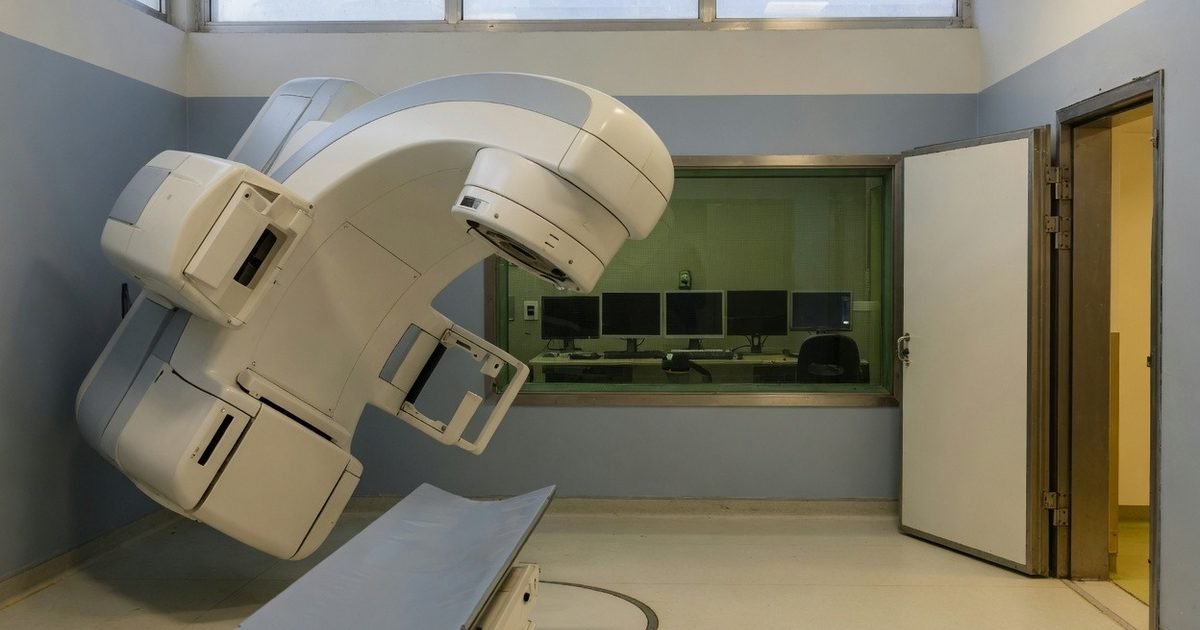
A cancer protocol is a sequence: pathology and staging first, then a regimen of chemotherapy cycles, often surgery, often radiation — each step dependent on the one before. The published capacity figures above describe the inputs that sequence depends on: machines for radiation, centres that keep them functional, and the specialists who run them. When the peer-reviewed survey reports seven functional centres nationally and the professional body describes fewer than 20 working machines for a country of over 200 million, the practical effect families describe is queues and distance: machines concentrated in the south-west mean patients elsewhere travel internally first — and demand concentrates on the same few centres.
What the record does not say matters just as much. There is no official count of Nigerians travelling abroad for oncology, no published per-country flow, and no waiting-list registry — so any assertion that a specific number of cancer patients travel to India each year is a claim, not a statistic. The honest planning input is your own case: what your protocol requires, what is available to you locally and when, and what the alternatives would cost in time and money, with your oncologist’s guidance.
Where India enters the picture
For families who do weigh India, the grounded inputs are published and checkable. On cost: conventional chemotherapy at private Indian hospitals is commonly quoted at about ₹20,000–2,00,000 per cycle (roughly $240–2,400), with targeted therapy and immunotherapy above that band, per our per-cycle chemotherapy cost guide — and a written, itemized quote for your specific regimen is the only real number, as our guide to what treatment in India really costs explains. On logistics: the Nigeria–India corridor runs on an in-person sticker visa (the High Commission states there is no e-visa facility for Nigerian nationals), no direct flights, and payments that need early planning — all set out in our corridor guide.
The step that comes before any of it, from home: an independent review of the pathology and the proposed protocol. Our cancer second-opinion guide explains what that review does and does not cover, and the written second opinion ($150) produces the document any oncologist anywhere can act on.
What Medtu Care’s fees are, and what they are not
Our fees: $50 for a remote consultation, $150 for a written independent second opinion, $1,000 for full journey coordination — each credited in full toward the next step, paid by you and never by a hospital. We are a facilitator, not a hospital and not a clinical authority: we do not treat cancer, we do not make clinical decisions, and we do not promise outcomes.
The fees page states the terms in full, including the crediting and refund rules.
Sources
- Radiotherapy services in low resource settings (Akinwande et al. 2023, PMC). Grounds the radiotherapy-centre line in the table and the capacity section: nine radiotherapy centres in Nigeria, of which seven were functional, the majority in the south-west geopolitical zone. Accessed 5 October 2026.
- Available radiotherapy machines inadequate for cancer treatment management (Guardian Nigeria, September 2022). Grounds the functional-machine line in the table: ARCON describing fewer than 20 functional radiotherapy machines nationwide. Accessed 5 October 2026.
- The PUNCH (Nigeria) — The High Cost of Medical Tourism in Nigeria & Its Impact. Grounds the FX-outflow line in the table and the “what the record does not say” section: CBN data showing $549.29m in health-related travel outflow in the first nine months of 2025, up 17.96% from $465.67m in the same period of 2024. Accessed 5 October 2026.
- Chemotherapy Cost in India Per Cycle — Medtu Care. The India cost figures: conventional chemotherapy commonly about ₹20,000–2,00,000 per cycle (roughly $240–2,400) at private hospitals, targeted therapy and immunotherapy above the band. Accessed 5 October 2026.
- What Treatment in India Really Costs — Medtu Care. The itemized-quote framing for any India plan. Accessed 5 October 2026.
- Medical Treatment in India from Nigeria: Costs, Visa, Trusted Process — Medtu Care. The corridor logistics: sticker visa, no direct flights, payment planning. Accessed 5 October 2026.
- Cancer Second Opinion Online from Indian Specialists — Medtu Care. The independent-review framing in the closing section. Accessed 5 October 2026.
- Medtu Care fees page. Grounds the closing fees section: $50 for a remote consultation, $150 for a written independent second opinion, $1,000 for full journey coordination, each credited in full toward the next step. Accessed 5 October 2026.